The enrolment pipeline leaks before anyone picks up.
Enquiry → contacted → applied → offer → enrolled → re-enrolled. Campus, online or hybrid, the shape is the same: enquiries arrive around the clock, the call back goes out in office hours, three days later, in one language. Most of them go to voicemail, and the answer on the table is always more leads. It’s rarely more leads. It’s the same leads, reached at an hour they could answer.
Case 04 · Hybrid and online provider, two campuses · Enquiry to enrolment 10% → 40% · No extra calls, no extra people
Last updated
Tick the ones you’ve said this month.
// Nothing is sent anywhere. It just counts.
0 of 6 ticked Two or more is the point where we should talk.
It’s rarely a people problem. Almost always, it’s a process problem.
Called at the wrong hour. Chased in the wrong language. Forgotten by next term.
Three stages, in your vocabulary. I use your terms on the first call; you shouldn’t have to translate your own business for me.
- After the first enquiry
Followed up on the provider’s clock.
You call it: Enquiry · contacted · “hot lead”
The enquiry arrives at nine at night from a phone, and the reply is a daytime call in English three days later. The person who raised their hand is at work and cannot talk. Nobody in the building is doing anything wrong; the sequence is just built around office hours rather than around the learner. Then the vocabulary hides it. A brochure download and a serious applicant are the same record until someone says otherwise. “Contacted” usually means dialled, and a voicemail is not a contact. “Hot” almost always means recent, and recency is not intent: a three-week-old enquiry who asked about fees twice is warmer than yesterday’s download.
The fixReply in the channel they used, within the hour they used it, and move “contacted” on a reply, not an attempt.
- Between offer and enrolment
An acceptance is not an enrolment.
You call it: Offer · accepted · applied · intake
A place is offered and the record stops moving. The person is deciding, or waiting on funding or an employer sign-off, or gone, and nothing on the board distinguishes the three. In the US, 10–40% of students who intend to enrol don’t show up in the autumn; in the UK a third of applicants deferred or considered deferring last cycle. A started application and a complete one sit in the same pile, and the incomplete pile is one of the most common and most preventable places an enrolment is lost. Offered, accepted and enrolled are three different things; counting the first as a win is how a strong offer month becomes a thin intake. And the deadline hides the pipeline: everything is urgent in the fortnight before it and invisible for the ten weeks before that.
The fix“Applied” split into started and complete; “offer” split into offered, accepted and enrolled; an owner and a next-step date on each.
- The intake after this one
Nobody goes back to the ones who didn’t start.
You call it: Deferrals · near-misses · “they’ll come back”
Someone who deferred, or missed the intake by a fortnight, or finished one course and never came back for the next, is the warmest name you own. Each one already cost you the full price of acquiring them, around $2,800 per student at a US private institution. In most enrolment systems they are indistinguishable from a cold enquiry by the following term.
The fixDeferrals, near-misses and finishers in a stage of their own, with a trigger for the next intake.
Nobody in admissions is slacking. The numbers say the design is.
Four figures from sources an enrolment lead already reads. None of them are mine, which is rather the point.
And a hundredfold drop in the odds of making contact at all. Six companies, three years, 15,000 leads and over 100,000 call attempts — on a 2007 dataset, so read it as the direction rather than the decimal.
Source · Oldroyd, MIT Sloan / InsideSales, 2007
When staff aren’t available. The enquiry doesn’t keep office hours; the reply does.
Source · Mongoose Higher Ed Messaging Benchmark, 2025
Which makes speed from enquiry to offer a winner-takes-all number, not a service metric.
Source · EducationDynamics, 2026
For graduate learners it’s 68%. Most expect a reply within a day.
Source · RNL, 2024
// Figures are US. The stage names differ. The leak doesn’t.
Reply the way they enquired, in the hour they enquired.
The sequence goes out within hours rather than days, on the channel the enquiry came in on, in the language it was written in. WhatsApp before phone. Evenings for the people who enquire in the evenings. Nothing here is more effort than what the team already does. It is the same effort, aimed at a moment the person can answer.
Then a stage structure so every enquiry has a next step and an owner, and one weekly view of anything that has gone quiet. No extra calls, no extra people, no extra spend on leads. Nothing gets ripped out that already works: if the student or learner record system is doing the enrolment record properly, it keeps doing it, and the pipeline sits in front of it up to the point someone is enrolled.
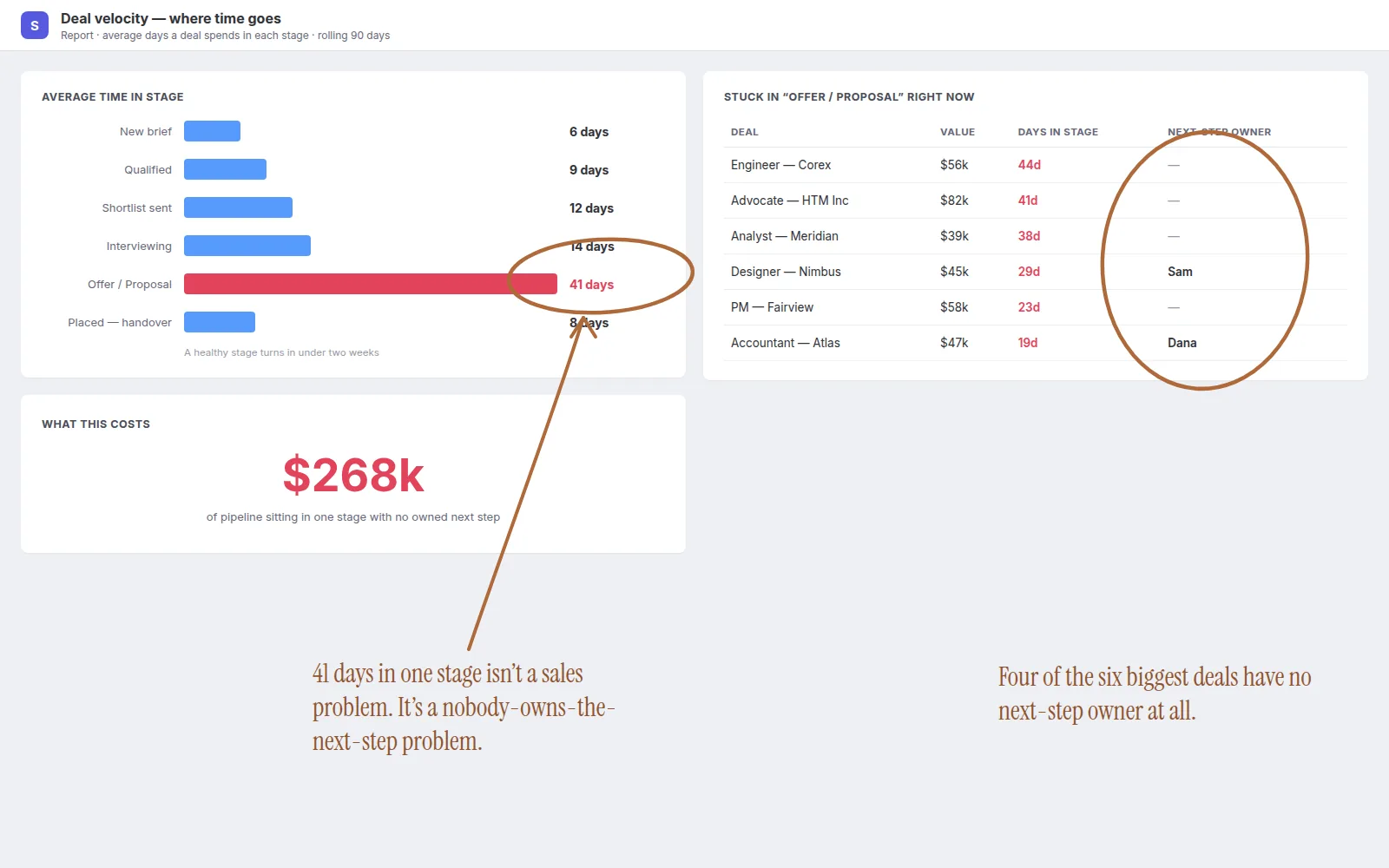
Three numbers you’d watch afterwards. Not a dashboard nobody opens.
Measured in hours, not days, and by hour of day. An average hides the nine-at-night enquiries entirely.
Phone against WhatsApp against email. The channel they used to enquire is the one that answers.
Not enquiry to offer. A place nobody takes up is a number that flatters the intake.
Proof. They asked for more leads. They already had them.
Leads come in, get called, and go quiet.Enquiry to enrolment 10% →40% Later asked back to work on their student recruitment incentives. Read the case →
- Time to reach a lead
- 3–5 days → a few hours
- Extra calls or people required
- none
Reply in the channel they used, in the hour they used it.
The first-24-hours sequence for WhatsApp, email and phone, with the messages written out for office hours, after hours and hour 24, plus the sheet that shows your speed-to-lead by hour of the day. Your first name and email, and both files are yours.
Unlocked · both files are below
3 pages · A4
Google Sheet · one click makes your own copy
If you want the read: fill in the sheet for two weeks, send me the within-the-hour percentage and your worst hour, and I’ll tell you what they say. No call needed.
We need more enquiries. Usually you don’t.
Asked most often where conversion sits around one in ten and the budget conversation is about buying more leads.
-
The brief
Shouldn’t we just buy more enquiries?
Check the ones you already have first. If one in ten enrols, ten times the enquiries is ten times the students; that reasoning is sound, and it is also the most expensive way to fix a follow-up problem. Fix the follow-up and the same enquiries convert several times better, at no extra media spend.
-
Channel
Isn’t WhatsApp unprofessional for admissions?
It’s the channel they enquired on. Answering an enquiry where it was made is the definition of professional; making someone switch channels to be served is the opposite. Nearly nine in ten first contacts with a college now happen digitally. The formality can live in the offer letter. The reply has to live where the person is.
→ What evidence should move a deal to the next stage? A reply is a contact. A voicemail isn’t.
-
The system
Do we have to replace our enrolment system?
No. The student or learner record system holds the enrolment record and keeps doing that. What is usually missing is the pipeline in front of it, enquiry to enrolled, with a next step and an owner on every record. That sits alongside, and the team works in it.
I’ll tell you where I think your enrolment pipeline stalls on the first call, whether or not you ever work with me. No charge, no deck.
If enquiries are not arriving at all, the problem is demand rather than enrolment process, and marketing is the better first call. I would rather say that in thirty free minutes than in a write-up.
Two ways in.
The first call confirms the cause. It can’t raise a listed price: if the cause is different, I swap the fix at its own price.
Every figure on this page, and where it comes from.
Checked 28 August 2026.
- Lead Response Management study (Oldroyd, MIT Sloan / InsideSales, conducted 2007): 21-fold decrease in the odds of qualifying and 100-fold decrease in contact odds between a 5-minute and a 30-minute response; six companies, 15,000+ leads and 100,000+ call attempts over three years. leadresponsemanagement.org
- Mongoose, 2025 Higher Ed Messaging Benchmark Report: 47% of chat conversations after hours. hellomongoose.com
- EducationDynamics, “How higher education leaders can win the race to enrollment”, January 2026: 72% of modern learners enrol at the first institution that admits them. educationdynamics.com
- RNL, “Building recruitment success”, September 2024: 69% of undergraduates and 86% of graduate learners expect a response within 24 hours; 58% and 68% say a slow response lowers interest. ruffalonl.com
- RNL, “Beyond the click”, 2025: nearly 90% of first college contact happens digitally. ruffalonl.com
- RNL, 2022 Cost of Recruiting an Undergraduate Student: $2,795 per student at four-year private institutions. ruffalonl.com
- MDRC, citing Castleman, Page & Snowdon (Harvard, 2013): 10–40% of college-intending graduates don’t enrol the following autumn. mdrc.org
- UCAS, End of Cycle Survey 2025: 32% deferred or considered deferring. ucas.com
- Mongoose, “Admissions melt prevention”, 2025: incomplete applications among the most common and most preventable sources of melt. hellomongoose.com
Same enquiries. Reached at an hour they could answer.
No charge. Tell me how an enquiry moves through your admissions office and I’ll tell you where I think it stalls.